The quiet client: why silence is the signal you keep missing


Ask any freelancer or agency owner how they lost a client and you will hear a version of the same story. Nothing went obviously wrong. There was no angry email. The client just replied a little slower, then a lot slower, then not at all. Silence is the most common warning sign in client work, and the easiest one to miss.
Why silence is so easy to miss
A complaint lands in your inbox and demands a reply. Silence does the opposite. It leaves nothing to respond to, so it slips under everything else on your plate. It also looks innocent. Clients get busy. People go on holiday. One slow reply means nothing. The pattern is what matters, and patterns are hard to see when you are juggling ten clients at once.
The signals worth watching
- Reply time stretching. A client who used to answer the same day now takes four.
- Shorter replies. Detailed feedback turns into "looks fine".
- A proposal opened but not signed. They looked, more than once, and said nothing.
- A renewal date getting closer with no conversation about what comes next.
- Fewer people on the thread. The decision maker has quietly stepped back.
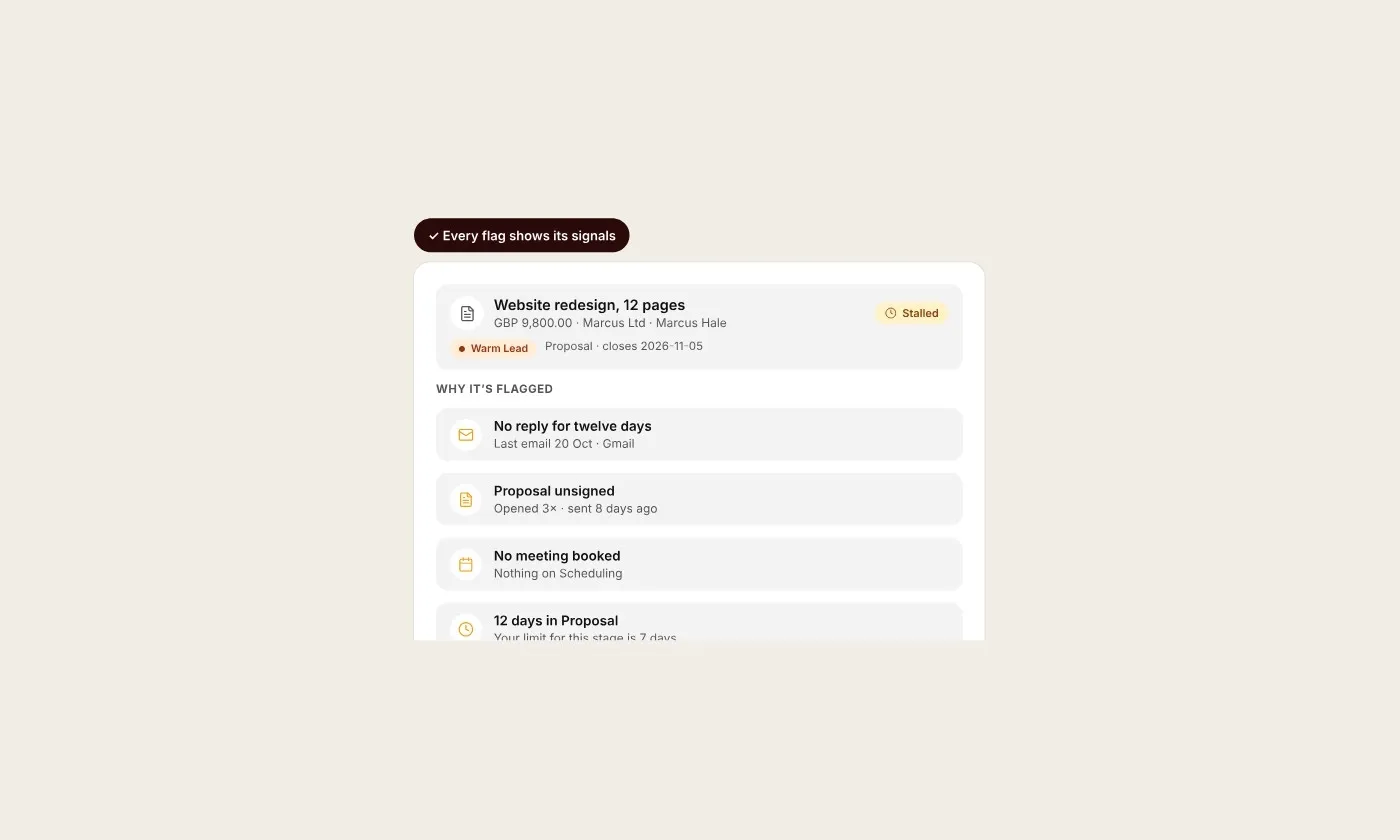
Any one of these on its own is noise. Two or three together are a client drifting.
What to do when a client goes quiet
- Reach out early. A friendly check in after a week is easy. After a month it feels awkward.
- Make it about them. Ask how the work is landing, not whether they still need you.
- Give them something useful. A quick idea, a small win, a result from the work you did.
- Make the next step obvious. Suggest a short call and offer two times.
Let something else do the watching
You should not have to track reply times in a spreadsheet. Skkido reads your inbox, proposals and renewals, and marks each client with a clear state. When a client starts to drift, it tells you who, and why, while there is still time to fix it.
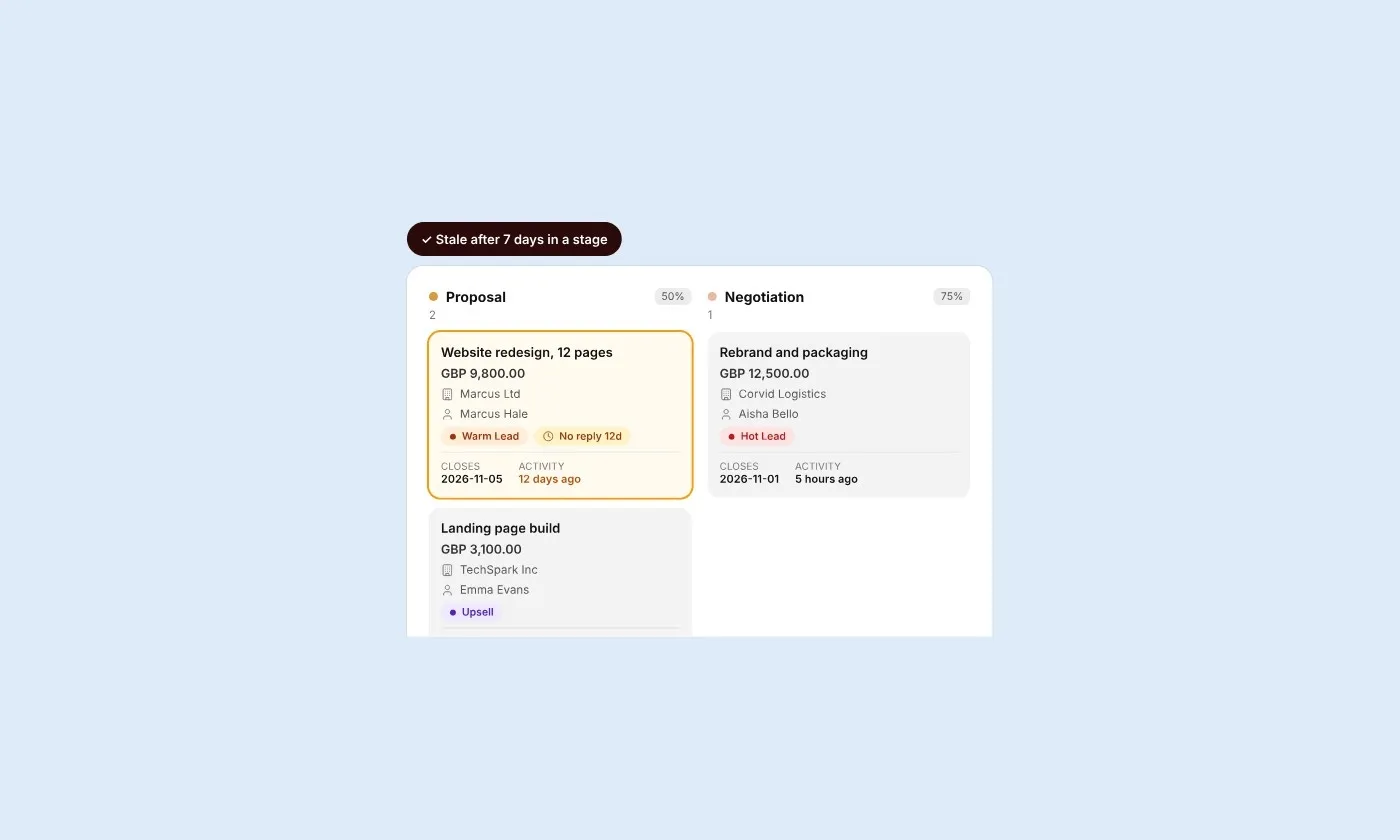
See which of your clients have gone quiet. Start free at skkido.com.
See this caught automatically, in your own client list
Skkido reads what's agreed against what's happening and flags the gap the moment it opens. No setup, no rules to configure.